

IFS/Parts Work
Internal Family Systems
While I am not formally certified in Internal Family Systems (IFS), I do incorporate Parts Work into my therapy approach and participate in ongoing consultation and training in this area. Internal Family Systems is one approach to Parts Work.
We all have different “parts” within us. Have you ever felt like one part of you wanted something, while another part of you wanted the complete opposite? Maybe part of you wants closeness, while another part pushes people away. Or part of you knows what you should do, but another part just can’t seem to get there.
So often, we try to talk ourselves into something, talk ourselves out of something else, or judge ourselves for feeling the way we do. Therapy can help us slow down enough to hear these different parts more clearly, giving each one space and a voice. As we do that, deeper patterns, wounds, and subconscious beliefs often begin to make more sense.
Together, we work to make sense of why you think, feel, and react the way you do — especially when you feel stuck, conflicted, or frustrated with yourself. I use metaphor, practical insight, and an understanding of the brain and nervous system to help clients better understand themselves and their patterns.
RLT
Relational Life Therapy
Relational Life Therapy, often called RLT, is one of the approaches I pull from when I’m helping couples understand the pattern they keep repeating.
Most couples don’t get stuck because they don’t love each other or because they haven’t found the right communication script. They get stuck because, when things get hard, each person moves into a familiar pattern — defending, shutting down, criticizing, over-explaining, pursuing, withdrawing, people-pleasing, controlling, or giving up.
RLT helps us slow that whole pattern down and look at what is actually happening between you. Who loses their voice? Who takes up too much space? Who adapts, avoids, attacks, collapses, or tries to manage the other person? These dynamics are usually not random. They make sense when we understand each person’s history, but they still have to change if the relationship is going to feel healthier.
What I appreciate about RLT is that it is honest and practical. It is not just about insight, and it is not just about learning new “tools.” It helps couples practice saying what is true without being cruel, owning their part without falling apart, and staying present when they would normally shut down, blow up, or defend themselves.
I am a certified Relational Life Therapist with advanced training in the RLT model, including training as an RLT Bootcamp Facilitator. I do not offer RLT Bootcamps, but that training gives me a deeper understanding of the model and continues to shape how I work with couples in regular therapy sessions.
STAIR
Self Trust and Integrated Resilience
At the core, my goal is to help clients build self trust. In other words: when life gets hard, can I trust myself to move through it?
While Relational Life Therapy (see above) focuses on helping clients “live relationally,” STAIR helps me organize the session in real time. Lasting change requires both support and stretch. Push too hard and people become overwhelmed, defensive, or shut down. Stay too comfortable and nothing really changes.
So I’m constantly paying attention to what this person needs in order to move forward. That helps guide which questions, interventions, exercises, or experiments I use in the moment.
This model was developed by Juliane Taylor Shore and is grounded in the science of Interpersonal Neurobiology (IPNB). Her work has deeply shaped the way I practice, and I continue to learn from her through ongoing training and consultation.
If Jules’ name sounds familiar, you may know her from the podcast Why Does My Partner…?, which we previously co-hosted together with Rebecca Wong. While we’re no longer recording new episodes, the conversations are still available here.
Tracking Neural Networks
This is a unique way to tap into information buried in our subconscious.
Tracking Neural Networks is a way of accessing information stored in the subconscious through the body.
This is where things start to get a little weird—in a good way.
Most people can tell you what’s happening. They can’t always tell you why it’s happening.
They’ll say something like, “I know I shouldn’t be so upset by this,” while their body is having a completely different reaction.
When something is emotionally important, your body often knows it before your conscious mind does.
During a session, I may ask you to notice what happens when I say something. Maybe you suddenly feel a tightness in your chest, a knot in your stomach, tension in your shoulders, or an unexpected emotion. Instead of analyzing it, we get curious about it.
By following those sensations and responses, we can uncover the deeper beliefs, emotional wounds, and fears operating beneath the surface.
It may sound strange, but some of the most important information about why you feel stuck, triggered, anxious, disconnected, or frustrated is often stored outside of conscious awareness. Tracking helps us access that information so we can work with the real issue instead of just managing symptoms.
IFS/Parts Work
Internal Family Systems
While I am not formally certified in Internal Family Systems (IFS), I do incorporate Parts Work into my therapy approach and participate in ongoing consultation and training in this area. Internal Family Systems is one approach to Parts Work.
We all have different “parts” within us. Have you ever felt like one part of you wanted something, while another part of you wanted the complete opposite? Maybe part of you wants closeness, while another part pushes people away. Or part of you knows what you should do, but another part just can’t seem to get there.
So often, we try to talk ourselves into something, talk ourselves out of something else, or judge ourselves for feeling the way we do. Therapy can help us slow down enough to hear these different parts more clearly, giving each one space and a voice. As we do that, deeper patterns, wounds, and subconscious beliefs often begin to make more sense.
Together, we work to make sense of why you think, feel, and react the way you do — especially when you feel stuck, conflicted, or frustrated with yourself. I use metaphor, practical insight, and an understanding of the brain and nervous system to help clients better understand themselves and their patterns.
RLT
Relational Life Therapy
Relational Life Therapy, often called RLT, is one of the approaches I pull from when I’m helping couples understand the pattern they keep repeating.
Most couples don’t get stuck because they don’t love each other or because they haven’t found the right communication script. They get stuck because, when things get hard, each person moves into a familiar pattern — defending, shutting down, criticizing, over-explaining, pursuing, withdrawing, people-pleasing, controlling, or giving up.
RLT helps us slow that whole pattern down and look at what is actually happening between you. Who loses their voice? Who takes up too much space? Who adapts, avoids, attacks, collapses, or tries to manage the other person? These dynamics are usually not random. They make sense when we understand each person’s history, but they still have to change if the relationship is going to feel healthier.
What I appreciate about RLT is that it is honest and practical. It is not just about insight, and it is not just about learning new “tools.” It helps couples practice saying what is true without being cruel, owning their part without falling apart, and staying present when they would normally shut down, blow up, or defend themselves.
I am a certified Relational Life Therapist with advanced training in the RLT model, including training as an RLT Bootcamp Facilitator. I do not offer RLT Bootcamps, but that training gives me a deeper understanding of the model and continues to shape how I work with couples in regular therapy sessions.
STAIR
Self Trust and Integrated Resilience
At the core, my goal is to help clients build self trust. In other words: when life gets hard, can I trust myself to move through it?
While Relational Life Therapy (see above) focuses on helping clients “live relationally,” STAIR helps me organize the session in real time. Lasting change requires both support and stretch. Push too hard and people become overwhelmed, defensive, or shut down. Stay too comfortable and nothing really changes.
So I’m constantly paying attention to what this person needs in order to move forward. That helps guide which questions, interventions, exercises, or experiments I use in the moment.
This model was developed by Juliane Taylor Shore and is grounded in the science of Interpersonal Neurobiology (IPNB). Her work has deeply shaped the way I practice, and I continue to learn from her through ongoing training and consultation.
If Jules’ name sounds familiar, you may know her from the podcast Why Does My Partner…?, which we previously co-hosted together with Rebecca Wong. While we’re no longer recording new episodes, the conversations are still available here.
Tracking Neural Networks
Tracking Neural Networks is a way of accessing information stored in the subconscious through the body.
This is where things start to get a little weird—in a good way.
Most people can tell you what’s happening. They can’t always tell you why it’s happening.
They’ll say something like, “I know I shouldn’t be so upset by this,” while their body is having a completely different reaction.
When something is emotionally important, your body often knows it before your conscious mind does.
During a session, I may ask you to notice what happens when I say something. Maybe you suddenly feel a tightness in your chest, a knot in your stomach, tension in your shoulders, or an unexpected emotion. Instead of analyzing it, we get curious about it.
By following those sensations and responses, we can uncover the deeper beliefs, emotional wounds, and fears operating beneath the surface.
It may sound strange, but some of the most important information about why you feel stuck, triggered, anxious, disconnected, or frustrated is often stored outside of conscious awareness. Tracking helps us access that information so we can work with the real issue instead of just managing symptoms.
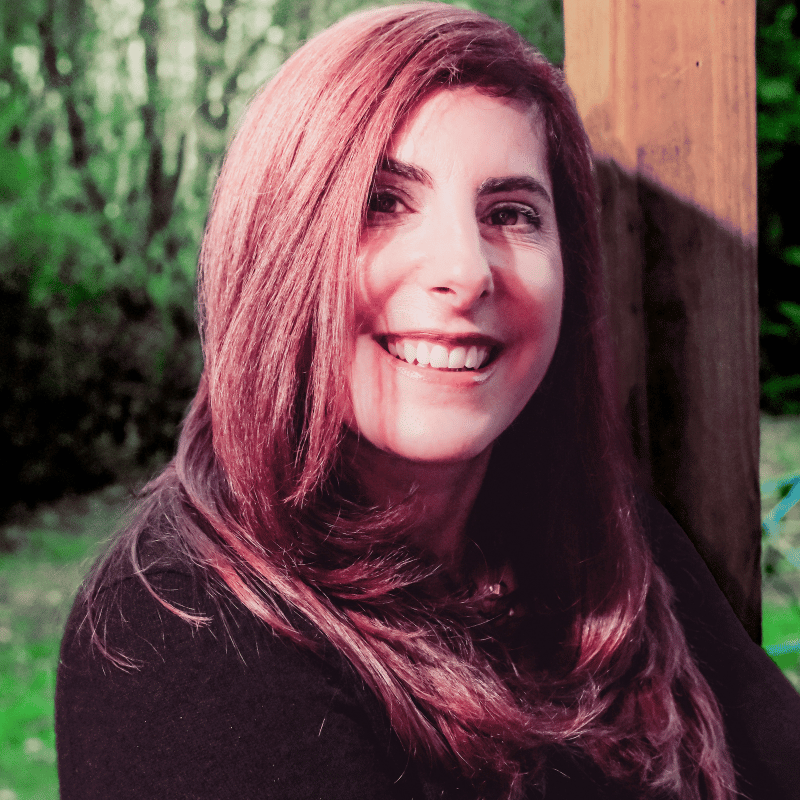
Vickey Easa
MSW, LICSW
Education, Experience & Training
- Ongoing Consultation & Training in Parts Work
- STAIR Certified, 2025
- Certified RLT Bootcamp Facilitator, 2020
- Certified Relational Life Therapist (RLT), 2018
- Massachusetts Licensed Independent Clinical Social Worker #115004, 2009
- Masters in Social Work, CalState Long Beach, 2002
- Bachelors of Arts in Psychology, Pepperdine University, 1996

Vickey Easa
MSW, LICSW
Education, Experience & Training
- Ongoing Consultation & Training in Parts Work
- STAIR Certified, 2025
- Certified RLT Bootcamp Facilitator, 2020
- Certified Relational Life Therapist (RLT), 2018
- Massachusetts Licensed Independent Clinical Social Worker #115004, 2009
- Masters in Social Work, CalState Long Beach, 2002
- Bachelors of Arts in Psychology, Pepperdine University, 1996

...So that change becomes easy
I have almost 20 years of experience working with individuals and couples who are struggling with repetitive patterns and who are stuck in old stories. My work with clients helps them break free from these old patterns to build the life they want while uncovering the person they want to be.
I deeply believe that without learning about our histories (why we do what we do), we can learn all of the new tools we want but we’ll stay stuck in old patterns. When we learn about our histories, our minds can finally adopt the new tools and behaviors we’ve been reaching for. Instead of living in old or automatic frameworks, my work with clients helps them unearth new truths about who they really are and want to be in the world.
My therapeutic framework is informed by the training I have done in the STAIR Method, Relational Life Therapy, Tracking Neural Networks, and IFS/Parts Work. You can read more about my specific therapeutic approach and training by scrolling up/down on this page for the “How I Work” section. I am consistently nurturing myself as an individual and professional with continued education and training – I’m currently engaged in two different consultation groups a month to hone my skills. I am always learning, so my therapeutic framework continuously evolves as time moves forward. I like to joke that if you take a break from therapy with me for six months or more, you will likely come back to what feels like a new therapist due to my professional growth and shifts.
It seems that most therapists either sit back and listen without offering input, OR they give you advice and tell you what you should do. What makes my approach unique is that I am a weird mix of those two approaches: I will offer input (sometimes based on brain science, sometimes not) while not telling you what you should do. Through our conversations, my clients find their own answers within themselves. And they are typically shocked when they do. My commitment to continuing to unlock new opportunities within myself, both personally and professionally, guides my work with clients which is grounded in enthusiasm and compassion.
I know what it’s like to look deeply within, to take responsibility, and to discover new ways of being. And I know how much that can transform your life, because it’s transformed mine. I can help you do that too. If you are ready to take responsibility where you can to make the changes you want, let’s connect!

...So that change becomes easy
I have almost 20 years of experience working with individuals and couples who are struggling with repetitive patterns and who are stuck in old stories. My work with clients helps them break free from these old patterns to build the life they want while uncovering the person they want to be.
I deeply believe that without learning about our histories (why we do what we do), we can learn all of the new tools we want but we’ll stay stuck in old patterns. When we learn about our histories, our minds can finally adopt the new tools and behaviors we’ve been reaching for. Instead of living in old or automatic frameworks, my work with clients helps them unearth new truths about who they really are and want to be in the world.
My therapeutic framework is informed by the training I have done in the STAIR Method, Relational Life Therapy, Tracking Neural Networks, and IFS/Parts Work. You can read more about my specific therapeutic approach and training by scrolling up/down on this page for the “How I Work” section. I am consistently nurturing myself as an individual and professional with continued education and training – I’m currently engaged in two different consultation groups a month to hone my skills. I am always learning, so my therapeutic framework continuously evolves as time moves forward. I like to joke that if you take a break from therapy with me for six months or more, you will likely come back to what feels like a new therapist due to my professional growth and shifts.
It seems that most therapists either sit back and listen without offering input, OR they give you advice and tell you what you should do. What makes my approach unique is that I am a weird mix of those two approaches: I will offer input (sometimes based on brain science, sometimes not) while not telling you what you should do. Through our conversations, my clients find their own answers within themselves. And they are typically shocked when they do. My commitment to continuing to unlock new opportunities within myself, both personally and professionally, guides my work with clients which is grounded in enthusiasm and compassion.
I know what it’s like to look deeply within, to take responsibility, and to discover new ways of being. And I know how much that can transform your life, because it’s transformed mine. I can help you do that too. If you are ready to take responsibility where you can to make the changes you want, let’s connect!